Eclawnomy Part 2: The Anatomy of Agency (What’s Inside a Claw?)
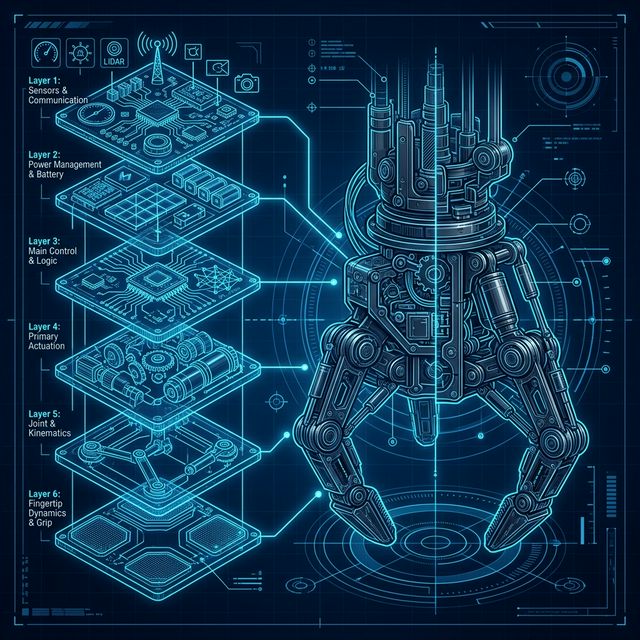
To the ordinary person, an AI agent looks like magic. But magic is just technology with a high knowledge barrier. Today, we’re tearing down that barrier. Let’s dissect the "Claw" and see how the Eclawnomy actually functions at the unit level.
The 6-Layer Agentic Stack
If GPT-5.4 is the "Brain," then a Claw is the "Body." To move from a chatbot to an autonomous coworker, an agent needs more than just reasoning. They need a 6-layer stack.
1. Infrastructure
The underlying cloud environment (like the serverless AWS/SST stack) that provides the compute and networking required for autonomous action.
2. The Energy (Tokens)
Tokens are the fuel. Every thought has a price. We use a hierarchy of models (o1/Claude) to balance reasoning power with unit cost.
3. Skills
Pre-defined templates and logic blocks that an agent can "load" into its context to perform specific tasks like refactoring or testing.
4. MCP (The Ports)
Model Context Protocol is the universal port. It standardizes how models interact with your tools, GitHub, or Stripe without custom code.
5. Memory
Cognitive Tiering: Real-time session data, local context, and episodic memory from previous failures or successes.
6. Orchestration
The "Director" logic. Agentic Team Building—coordinating the Planner, the Coder, and the QA Auditor into a single reliable unit.
Why You Should Care
Understanding this stack is the first step to overcoming the Knowledge Barrier.You don't need to write the code for these layers—Frameworks like OpenClaw and ServerlessClaw do that for you.
But knowing how they work allows you to manage your agentic team with the same confidence you once managed a human department.
Join the Discussion
Have questions or want to share your AI code quality story? Drop them below. I read every comment.